

When investing in an outdoor structure, the materials you choose dictate far more than just the visual appeal of the building; they determine its lifespan, maintenance requirements, and overall structural integrity. Whether it is a simple storage solution for garden tools or a fully finished backyard workshop, a shed is a true extension of your property. Delivering exceptional, handcrafted structures alongside our Amish manufacturing partners means seeing exactly how different building materials perform over decades of real-world use.
For property owners, the buying process usually boils down to two major structural decisions: the exterior siding (Wood vs. Vinyl) and the structural sheathing (Plywood vs. Oriented Strand Board, or OSB). Making the right choice requires looking past the surface to understand how these materials handle weather, weight, and the test of time—especially when facing heavy snow loads, driving rain, and the distinct seasonal shifts of the Western New York region.
Here is a comprehensive breakdown of the pros, cons, and key differences to help you make an informed decision for your next outdoor building project.

Part I: The Exterior Showdown – Wood vs. Vinyl
The exterior of your shed is its first line of defense against the elements and the most prominent feature in your yard. Both wood and vinyl have distinct advantages, and the right choice usually comes down to your aesthetic preferences and your appetite for maintenance.
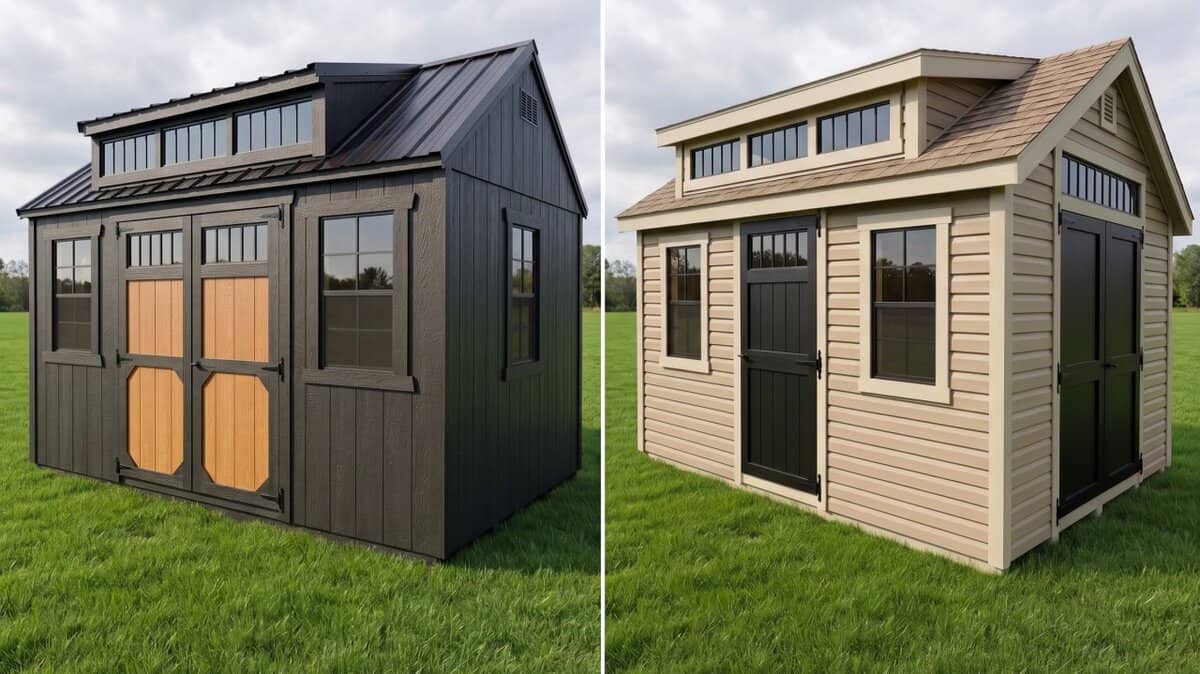
Wood Sheds: Classic Appeal and Ultimate Customization
Wood is the traditional standard for outdoor structures, offering a timeless, rustic charm that easily blends into natural landscapes. Modern wood sheds typically utilize engineered wood panels (like LP SmartSide) or classic T1-11 siding.
The Pros:
- Unmatched Customization: Wood’s greatest advantage is its versatility. It can be painted or stained to exactly match your home’s exterior, trim, or shutters. If you decide to change your home’s color palette in five years, your wood shed can easily be repainted to match.
- Aesthetic Character: There is a robust, handcrafted quality to wood that many homeowners prefer. It feels substantial and traditional.
- Ease of Modification: If you ever want to add a window box, install heavy-duty hooks on the exterior, or cut in a new vent, wood is incredibly easy to work with.
- Easy Repairs: If a section of siding is damaged by a rogue lawnmower or a fallen branch, a carpenter can easily cut out the damaged section and patch in a new piece of wood siding.
The Cons:
- Routine Maintenance: Wood requires upkeep. To prevent rot, moisture intrusion, and fading, a wood shed needs to be repainted or re-stained every 5 to 10 years, depending on sun exposure and climate.
- Pest Vulnerability: While modern engineered woods are treated to resist termites and fungal decay, raw or poorly maintained wood can still attract wood-boring insects or woodpeckers over time.
Vinyl Sheds: The Low-Maintenance Champion
It is important to understand that a “vinyl shed” is not made entirely of plastic. High-quality vinyl sheds are built with a traditional wooden frame and sheathing, which is then wrapped in a protective moisture barrier and clad in residential-grade vinyl siding.
The Pros:
- Zero Painting Required: The absolute biggest draw of vinyl is that it never needs to be painted, stained, or sealed. The color is baked right into the material.
- Exceptional Weather Resistance: Vinyl siding sheds water perfectly. It will not rot, warp, split, or blister, making it highly resilient against harsh, wet weather and heavy snow accumulation against the base.
- Easy to Clean: Keeping a vinyl shed looking brand new is as simple as occasionally taking a power washer or a garden hose to the exterior.
- Pest Proof: Termites and carpenter bees have absolutely no interest in chewing through vinyl.
The Cons:
- Higher Upfront Cost: Because you are essentially paying for a fully sheathed wood shed plus the addition of vinyl siding and trim, the initial purchase price is generally higher than that of a standard wood shed.
- Limited Customization: What you buy is what you get. You cannot easily paint vinyl siding, so you are locked into the color you initially choose.
- Difficult to Patch: If vinyl siding cracks (which can happen if struck by a heavy object in freezing temperatures), replacing it requires sourcing the exact matching siding profile and color, and unzipping the panels to install a replacement.

Oriented strand board (left) vs. Plywood (right)
Part II: The Structural Core – OSB vs. Plywood
While the exterior catches the eye, the “bones” of the shed dictate its strength. Sheathing is the paneling applied to the wall studs, floor joists, and roof trusses. It provides shear strength, encloses the building, and creates the deck for roofing and flooring. The debate between Plywood and OSB (Oriented Strand Board) is one of the most heavily discussed topics in construction.
Oriented Strand Board (OSB): Cost-Effective Density
OSB is an engineered wood product made by taking rectangular wood strands, mixing them with waterproof adhesives, and compressing them under extreme heat and pressure.
The Pros:
- Cost Efficiency: OSB is generally significantly cheaper than plywood, which helps keep the overall cost of the structure down.
- Consistent Density: Because it is engineered from thousands of small strands, OSB has no natural defects like knotholes, voids, or soft spots. It is incredibly dense and heavy.
- Environmentally Friendly: OSB can be made from smaller, faster-growing trees, making it a highly sustainable building product.
The Cons:
- Moisture Vulnerability: This is OSB’s Achilles’ heel. While the face of the board is water-resistant, the edges are highly susceptible to moisture. If OSB gets wet, the edges can swell up to 15% in thickness. More importantly, when it dries, it does not return to its original shape. This permanently swollen edge can cause ridges under roofing shingles or flooring.
- Weight: OSB is heavier than plywood, which adds dead weight to the roof structure.
Plywood: The Premium Standard for Moisture Resistance
Plywood is made by taking thin sheets (veneers) of solid wood and gluing them together under heat and pressure. Each adjacent layer has its wood grain rotated 90 degrees, creating a cross-laminated structure of exceptional strength.
The Pros:
- Superior Moisture Performance: Plywood handles water much better than OSB. While it will swell slightly if exposed to standing water, it swells evenly and, crucially, returns to its original dimensions once it dries.
- Stiffness and Strength: The cross-laminated grain makes plywood incredibly stiff. It spans floor joists and roof trusses with less sagging over time compared to OSB.
- Nail Holding Power: Plywood holds nails and screws more securely over a long period, especially in environments where humidity fluctuates.
- Lighter Weight: Plywood is lighter, putting less strain on the shed’s overall framing, particularly the roof trusses.
The Cons:
- Higher Cost: Plywood is a premium building material, and opting for a shed fully decked out in plywood will raise the purchase price.
- Natural Imperfections: Because it is made of solid wood veneers, lower-grade plywood can have interior voids or exterior knotholes, though high-quality construction grades minimize this.
Breaking It Down by Application
To truly understand the difference, you have to look at how these materials perform in specific areas of the shed:
1. The Floor Decking The floor takes the most abuse. You are parking wet riding mowers, snowblowers dripping with melting snow, and heavy ATVs.
- The Winner: Plywood. Because plywood dries out and returns to its original shape, it is vastly superior for a shed floor. If OSB gets repeatedly wet from a snowblower melting over the winter, the seams will swell, eventually creating a bumpy, deteriorating floor. A 5/8″ or 3/4″ exterior-grade plywood floor is a must for heavy-duty storage.
2. The Roof Decking The roof must bear the weight of heavy, wet lake-effect snow and withstand potential moisture from condensation or a damaged shingle.
- The Winner: Plywood. When heavy snow sits on a roof for months, you want the stiffness of plywood to prevent sagging between the trusses. Furthermore, if a storm damages a shingle and water intrudes, plywood will dry out and survive the event. OSB will permanently swell, causing the shingles above it to lift and buckle, leading to a much more expensive roof repair.
3. The Wall Sheathing Walls are generally protected by siding and overhanging eaves, meaning they rarely see direct, standing water. They primarily need shear strength to keep the building square during high winds.
- The Winner: Tie. In a properly constructed shed wrapped in a weather barrier and quality siding, OSB performs exceptionally well as wall sheathing. It provides massive shear strength and keeps costs down. However, if you are planning to hang incredibly heavy shelving systems directly into the sheathing, plywood does offer slightly better screw-holding power.
The Final Verdict: Making the Right Investment
Ultimately, the right choice comes down to your budget, your maintenance tolerance, and how you plan to use the building.
If you want a cost-effective garden shed and don’t mind spending a weekend every few years with a paintbrush, an OSB-sheathed wood shed is a perfectly viable and beautiful option. However, if you are looking for a generational structure—a heavy-duty workshop or a premium storage solution that will effortlessly handle brutal winters and heavy equipment with zero maintenance headaches—investing the extra capital upfront for a Plywood-decked, Vinyl-sided shed is the gold standard.
By prioritizing premium materials in the structural core and pairing them with maintenance-free exteriors, you guarantee a building that not only enhances the value of your property today but continues to stand strong, straight, and beautiful for decades to come.