


The backyard shed industry in Western and Central New York is currently experiencing a significant transformation that mirrors a shift in home architecture across the snow belt. Once viewed simply as a disposable structure to hide a lawnmower, store seasonal clutter, or store winter salt, the shed has evolved into a high-utility extension of the primary residence. Modern structures are now custom-designed “Studio Sheds,” dedicated “She-Sheds,” and sophisticated, insulated home offices that rival residential builds. These advanced sheds are constructed with residential-grade materials that can withstand the harshest elements the Northeast can produce. Specifically across the legendary snow belts of Buffalo, Rochester, and Syracuse—where winter can stretch into April and we measure snow in feet rather than inches—a shed isn’t just a luxury; it is a critical piece of property infrastructure.
As the heavy snows of a WNY winter finally recede, homeowners often find that the arrival of “April showers” reveals far more than just flowers. The dramatic freeze-thaw cycles and massive, wet lake-effect snow loads that define our region can take a significant, hidden toll on even the most ruggedly built structures over just a single season. Transitioning your shed from its long winter hibernation to spring readiness requires a strategic approach to protect this investment.
Drawing inspiration from the craftsmanship and durability standards of industry leaders like Sturdi-Built, we have outlined the top five best practices for opening your shed this spring and ensuring its longevity through the coming years of WNY weather patterns.

1. The Structural Integrity Audit: Foundation and Leveling
In the Buffalo and Rochester areas, the ground is notorious for “heaving.” Our unique climate, with its constant transition between deep freezing and rapid thawing, causes the soil—especially the common clay and silt varieties—to expand and contract aggressively. This movement exerts incredible hydraulic pressure, which can easily shift the entire foundation of your shed over the winter, regardless of whether it’s built on a professionally poured concrete pad, a bed of crushed stone, or on leveling blocks.
What to Check For:
- Door Alignment: This is the “canary in the coal mine” for structural shift. If your shed door, which operated perfectly in November, is suddenly sticking, rubbing aggressively at the top or bottom of the frame, or refusing to latch, the structure has likely twisted or settled.
- The Gap Test: Look closely at the trim, siding corners, and windowsills. Are there new, visible gaps or separation where the siding meets the roof line, indicating a corner has sunk?
- Foundation Perimeter Integrity: For sheds set on a stone pad, inspect the entire perimeter. Ensure the heavy spring snow melt hasn’t washed away the crushed stone base that stabilizes the runners.
Spring Maintenance Tasks:
- Re-leveling: If the structure has indeed shifted off-kilter, utilize a heavy-duty hydraulic jack and structural lumber blocks to subtly lift the sunken corner or side and shim it back to a perfect level.
- Clear the Perimeter: This task is crucial but often skipped. Remove any accumulated organic debris, old mulch, or soil that has built up against the bottom of the shed over the winter or was deposited by the snow melt. You want to see at least a few inches of clearance between the ground and the floor system to prevent the capillary action known as “wicking” moisture into the pressure-treated floor joists and eventually the sub-floor.

2. The Great Roof and Gutter De-Gunking
The cities of Buffalo, Rochester, and Syracuse are legendary for their annual snow totals, and that heavy, wet snow places immense, sustained static pressure on any shed’s roofing system for months at a time. Furthermore, WNY is prone to severe ice damming when heavy slush freezes hard during rapid cold snaps, which forces water under shingles. By the time spring finally arrives, your roof has likely endured months of pressure, saturation, and potential ice damage that a simple visual glance might miss.
What to Check For:
- Shingle Health: From a safe ladder, look for “balding” asphalt shingles where protective granules have been scoured away by snow and ice movement, or shingle edges that have curled dramatically due to intense frost.
- Drip Edge Inspection: Ensure the metal drip edge is still properly diverted, either directly into the gutter system or completely away from the wooden fascia board and soffit.
- Internal Water Staining: Step inside your shed on a bright, sunny afternoon. Carefully inspect the rafters and the underside of the roof sheathing for dark spots or discoloration that indicate past leaks. If you see light peeking through anywhere, you have a critical problem that needs immediate, professional attention before the first heavy spring storm.
Spring Maintenance Tasks:
- Clear the Debris: Use only a soft-bristled broom or specialized roof rake to carefully remove pine needles, accumulated leaves, and those persistent maple “helicopters” from the low-slope roof surface. Never utilize metal tools, which can strip shingles of their protective coating. If left alone, this organic matter holds moisture against the shingles and accelerates premature rot.
- Gutter Flush: If your high-utility shed features gutters, clear them out completely. In the Northeast, clogged gutters lead to massive ice dams in the winter and rotted fascia sills in the spring. Utilize a snake or pressure-regulated hose to ensure downspouts flow free.

3. Pest Perimeter Defense
As the weather rapidly warms, every creature in Western New York—from clever field mice and resilient squirrels to invasive carpenter ants and wasps—is looking for a dry, warm place to start a family. A well-built shed is their prime real estate. If you utilized your shed for home office space or recreation over the winter, residual warmth and any food remnants make it even more attractive to these persistent squatters.
What to Check For:
- Chew Marks: Rigorously inspect the corners of the pressure-treated floor, the bottom trim, and the gap beneath the doors for signs of rodent damage, looking for active gnawing as animals try to enlarge entry points.
- Insect Tunnels and Waste: Be vigilant for fine sawdust-like material (known as “frass”) near baseboards and corners, which is the primary indicator of carpenter ants hollowing out framing lumber.
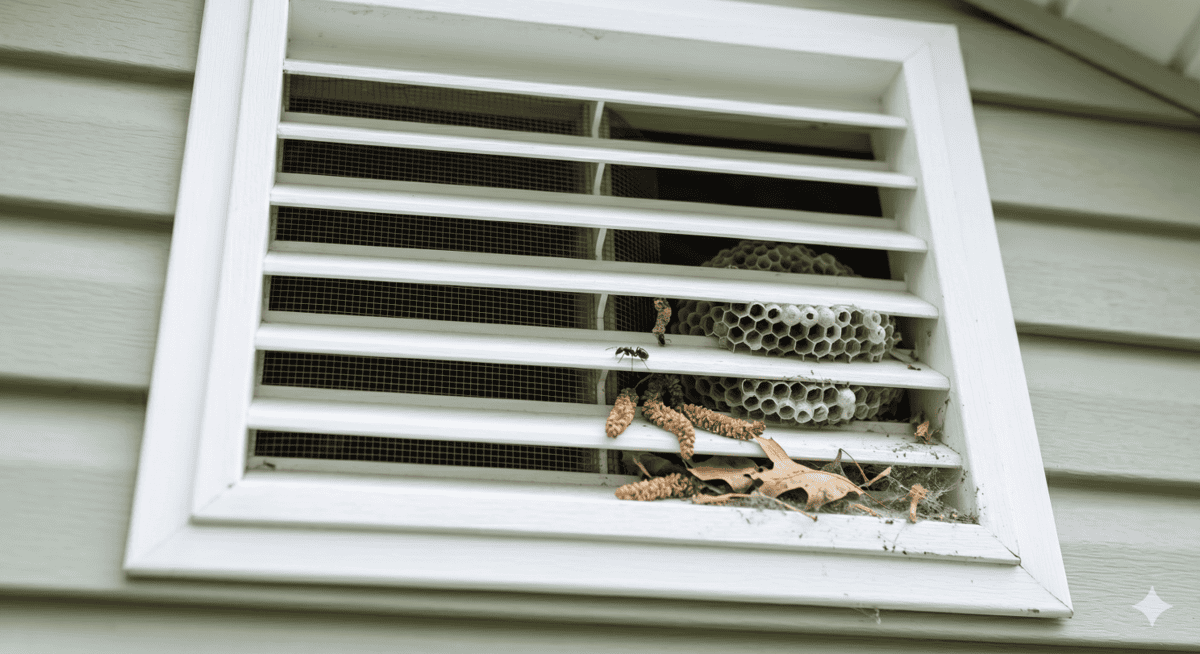
- Nests: Before you begin reaching into upper areas or rafters, carefully check them for early signs of paper wasp nests, mud dauber tubes, or bird nests before they become active.
Spring Maintenance Tasks:
- Seal the Entry Points: This is your best defense. Utilize a combination of stainless steel or copper wool (which rodents cannot chew through) and a premium, high-adhesion outdoor-rated polyurethane caulk to plug any gap or hole larger than a dime. Pay special attention to siding joints, corner trim, and any utility penetrations (e.g., for electrical conduit).
- Vegetation Management: Trim back any bushes or overhanging tree branches that have grown closer to the structure over the winter. These act as “highways” for ants, squirrels, and even raccoons to reach your roof. A 24-inch “dead zone” of gravel or river rock around the shed foundation is the gold standard in WNY for preventing both persistent moisture and insect penetration.

4. Siding and Paint Preservation
The heavy, humid air that moves off Lake Erie and Lake Ontario during a typical Western New York spring can be brutal on even durable natural wood and premium engineered wood products like LP SmartSide. Whether your shed is painted or stained, the protective finish is the only physical barrier standing between the wood substrate and pervasive fungal rot. Snow melt and spring rains can saturate the ground, keeping the lower sections of the shed damp for extended periods.
What to Check For:
- Peeling and Bubbling: Check the north-facing and east-facing sides of the shed specifically, as these sides stay damp much longer and receive minimal direct drying sun, making them far more prone to mold, mildew growth, and early paint failure.
- Splitting and Checking: On natural wood sheds (like cedar or pine), look for checking (small surface cracks) that have widened significantly over the winter due to the drying effect of extreme cold.
- Mildew and Algae Growth: Look for characteristic green or black spotting, particularly near the ground level or under the protection of the eaves, where humidity settles.
Spring Maintenance Tasks:
- The Gentle Wash: This is one of the most effective maintenance tasks for protecting siding. Do not use a high-pressure power washer, which can easily force water behind siding planks, damaging the building envelope and introducing mold into the wall cavity. Instead, utilize a soft, long-handled brush and a mild cleaning solution. A dilute oxygen bleach solution (like OxiClean) mixed according to instructions is highly effective at killing mold spores without damaging the paint finish.
- Touch-Up Paint and Stain: Small nicks, scratches, and any hairline cracks in the finish should be spot-primed and painted immediately. This isn’t about simple aesthetics; it’s about ensuring you completely seal the building’s outer protective “envelope.”

5. Inventory and Airflow Optimization
After six months of being completely buttoned up tight against the cold, the air inside your high-utility shed is likely exceptionally stale and, crucially, humid. That trapped moisture is a leading indicator of problems. Proper, consistent ventilation is often the main technical difference between a shed that lasts a robust 10 years versus one that remains pristine for 40 years. If you are using your shed as an advanced studio, office, or gym, humidity control is paramount.
What to Check For:
- Vent Obstructions: Physically ensure that your passive ventilation systems, like gable vents or ridge vents, haven’t been completely blocked by storage boxes inside, or outside by winter bird nests.
- Condensation: This is the critical warning sign of high internal humidity. Carefully check your stored metal tools. If they have developed a fine, localized layer of rust, your shed is not breathing properly, and moisture is settling on surfaces.
Spring Maintenance Tasks:
- The “Spring Air-Out”: This simple task is essential. On the first dry, breezy Saturday morning of the season, open all doors and pop any windows. Let the fresh spring air circulate completely for at least four hours to purge all stale, humid winter air.
- Equipment Service and Storage Swap: This is the tactical inventory management part. Drain any remaining stabilized winter fuel from your lawnmower and snowblower to prevent engine gumming. Check and sharpen all blades, change oil (if necessary), and inspect spark plugs.
- Reorganize for Seasonal Accessibility: Perform the “Spring Swap.” Move all snow shovels, heavy bags of salt, and winter blowers to the deepest storage spots. Move gardening tools, rakes, hoses, patio cushions, and Finger Lakes recreational gear to the front for easy access through a beautiful Western NY summer.
Why Quality Matters in the 716, 585, and 315
In resilient regions like Buffalo, Rochester, and Syracuse, standard “builder grade” construction simply doesn’t cut it. A snow load from a single lake-effect event can exceed 30 pounds per square foot, and spring winds whipping off the Great Lakes can exceed 60 MPH. The shed industry has shifted aggressively toward residential-standard construction for a reason: durability.
A high-quality shed, like those found at Sturdi-Built, doesn’t cut corners. It utilizes pressure-treated runners, 2×4 wall studs placed on 16-inch centers, dimensional lumber rafter systems, and engineered, rot-resistant siding because these components are built to survive the extreme forces specific to Western and Central New York. When you perform your spring opening, you aren’t just cleaning; you are actively protecting a substantial and sophisticated investment in your home.
Spring Checklist Summary:
- Check Level: Ensure doors swing freely and the floor system is completely stable.
- Inspect Roof: Safely clear debris and scrutinize shingles for ice or freeze damage.
- Pest Proof: Seal all gaps larger than a dime and implement the vegetation “dead zone.”
- Clean Siding: Perform the Gentle Wash; touch up any paint or stain gaps.
- Maximize Airflow: Schedule the “Spring Air-Out” and verify vents are not obstructed.
By following these best practices, you are guaranteeing that your shed remains far more than just a storage box—it is a durable, reliable extension of your home, fortified against humidity and pests, and ready to tackle another beautiful Western New York summer. Whether you are prepping to store your kayaks for the Finger Lakes, organizing your tools and lawn equipment for the backyard, or storing a UTV, a little preventative maintenance today prevents a major structural repair tomorrow.