

If you have spent any time observing the real estate and home improvement trends across Western & Central New York recently, you have likely noticed a fascinating shift. From the historic neighborhoods of Buffalo to the expanding suburbs of Rochester to the classic properties of Salt City, a quiet revolution is happening right in our backyards. The humble backyard shed is undergoing a massive transformation. No longer just a dusty receptacle for neglected lawnmowers and snowblowers, these structures have evolved into highly functional, aesthetically pleasing extensions of the home.
But why is this happening now, and why with such fervor in our region?
The answer lies at the intersection of macroeconomic housing trends and a growing demand for multi-functional living spaces. Driven by a restrictive real estate market, homeowners are realizing that the most pragmatic, economical, and value-adding move is not to pack up and leave, but to expand their current footprint. Let’s dive into the anatomy of this trend, exploring the “locked-in” effect gripping our local market, the rise of multi-functional spaces, and why investing in premium-quality, durable sheds has become the ultimate real estate hack for the modern homeowner.
The “Locked-In” Effect and Housing Squeeze
To understand the backyard renaissance, we first have to look at the math dictating the current housing market. Like much of the country, our region is experiencing a profound “locked-in” effect. During the height of the COVID-19 pandemic and the immediate post-pandemic period, a historic number of homeowners refinanced or purchased homes at rock-bottom interest rates—many securing fixed mortgages in the 2.5% to 3.5% range.
Fast forward to today’s market, where rates have surged and stabilized at significantly higher levels. Homeowners who would traditionally be looking to “move up” into a larger property to accommodate a growing family, a work-from-home lifestyle, or changing needs are taking one look at the current interest rates and hitting the brakes. Trading a 3% mortgage for a 7% mortgage on a more expensive home drastically alters a family’s monthly budget, making the traditional housing ladder financially prohibitive for many.
Consequently, this rate shock has led to historically low housing inventory. Because people are refusing to surrender their favorable mortgage rates, they aren’t listing their homes. This lack of supply has created a slower, highly competitive market where the few available homes command premium prices. For the average WNY homeowner feeling the squeeze of a house that suddenly feels too small, moving is simply no longer the most attractive option. The math dictates that they stay put. But the need for space remains.
Expanding in Place: The Pragmatic Solution
Faced with this gridlock, homeowners are pivoting. If you cannot affordably move to a larger house, the logical next step is to make your current house larger. However, traditional home additions are fraught with their own set of challenges. Tearing off a roof or pouring a new foundation for an extra room can cost tens of thousands, if not hundreds of thousands, of dollars. It involves lengthy permitting processes, months of living in a dusty construction zone, and soaring labor and material costs.
Enter the modern shed.
Installing a detached structure in the backyard has emerged as the most pragmatic, economical way to expand a property’s usable square footage. At a fraction of the cost of a traditional home addition, a premium shed offers immediate relief from spatial constraints. It can be built and installed in a matter of weeks, requires less invasive site prep, and instantly redefines how a family interacts with their property. And to get started, it’s as simple as searching ‘sheds near me’.

The Rise of Multi-Functional Spaces
What makes this trend so exciting is how these structures are being utilized. We have firmly entered the era of multi-functional space. The modern family requires flexibility, and a detached shed provides a blank canvas that can be tailored to exact lifestyle needs.
Here are a few prominent examples of how WNY homeowners are utilizing these spaces:
The “Shedquarters” (Home Office): Remote and hybrid work models are here to stay. However, working from the kitchen table or a cramped spare bedroom is a recipe for burnout. A backyard office provides the crucial physical and psychological separation between “home” and “work.” With proper insulation, electrical wiring, and climate control, a shed becomes a quiet, professional sanctuary just steps from the back door.
The Backyard Gym: Gym memberships are expensive, and commuting to a fitness center in the middle of a Western or Central New York winter is a significant deterrent to staying active. Homeowners are transforming durable sheds into dedicated fitness studios, complete with rubberized flooring, weight racks, and cardio equipment.
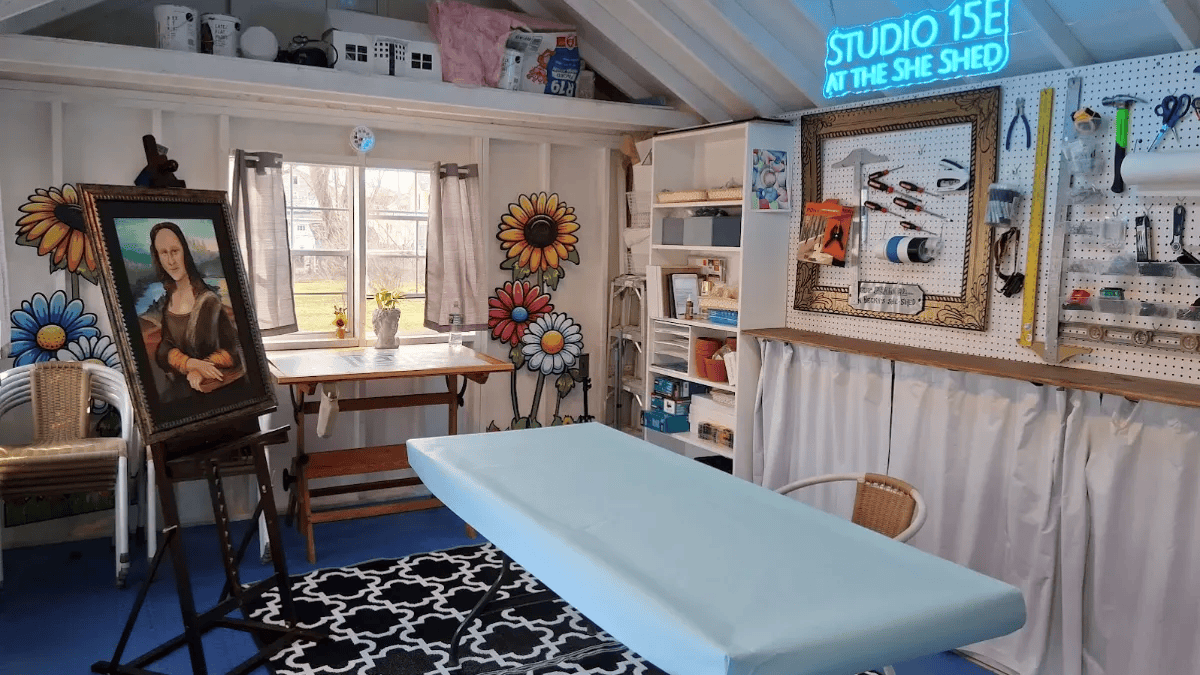
Creative Studios and Maker Spaces: Whether it is a pottery studio, a woodworking shop, or a dedicated space for crafting, a shed allows homeowners to pursue their passions without cluttering the main house or worrying about noise and mess.
The Entertainment Hub: From backyard pubs and tasting rooms to poolside cabanas and teenage hangouts, sheds are being designed as secondary entertainment zones. They provide a unique venue for hosting guests during our beautiful summers and crisp autumn evenings.
By moving these specialized functions out of the main house and into a dedicated backyard space, the primary residence becomes less cluttered and more peaceful. The shed doesn’t just add a room; it optimizes the entire property.

The Investment Case: Why Plywood, Oriented Strand Board (OSB), Vinyl, and LP SmartPanel Rule WNY and CNY
It is crucial to note that not all sheds are created equal. When viewing a backyard structure as a legitimate extension of your home and a capital investment, material quality is paramount. Board and Batten, flimsy metal kits, and cheap plastic models simply will not withstand the realities of our climate, nor will they add tangible value to your property.
For maximum return on investment, homeowners are turning to sheds constructed with heavy-duty plywood, engineered OSB, and either high-grade vinyl or LP SmartSide Panel siding, which stand up to the elements, unwanted critters, and the test of time.
The Strength of Plywood and OSB: A shed built with a solid wood core using plywood and engineered OSB delivers unmatched structural integrity. Because the floor endures the heaviest use and year-round moisture, it is undoubtedly the most important part of any shed. Therefore, treated plywood flooring and 16-inch on-center construction should be 100% non-negotiable. For sidewalls and roof decking, both plywood and OSB perform exceptionally well when protected by proper exterior siding and roofing. Unlike board and batten and other cheap alternatives, which can warp and shrink with the changing seasons, high-quality plywood and OSB are incredibly resilient. This durability and strength is essential for withstanding our heavy lake-effect snow and high winds, ensuring your structure feels solid, secure, and permanent for decades.
The Durability of LP SmartSide Panel: For homeowners who prefer the timeless aesthetic of traditional wood siding but crave modern performance, LP SmartSide Panel is an exceptional choice. Unlike traditional board and batten—which demands constant upkeep to fight off rot and moisture infiltration—LP SmartSide is an engineered wood product that resists rot, fungal decay, and termites. It features a realistic wood grain texture, high durability, and a fade-resistant finish, offering the charm of wood with a long-term, low-maintenance lifespan ideal for the harshest of seasons.
The Longevity of Vinyl: When it comes to any structure exterior, vinyl siding is the ultimate zero-maintenance solution. Engineered to easily handle the demanding weather patterns of Buffalo, Rochester, and Syracuse, high-grade vinyl is practically impervious to the elements. It maintains its structural integrity and vibrant appearance through heavy lake-effect snows and hot, humid summers alike. Because it will never rot, warp, peel, or succumb to termite damage, it offers a permanent, pristine finish and delivers long-term peace of mind. A quick power wash once a year is usually all it takes to keep a vinyl shed looking brand new.
By steering clear of high-maintenance board and batten, flimsy plastics, and rusting metals, and instead combining the structural rigidity of plywood and OSB with the longevity of vinyl or LP SmartSide, homeowners are purchasing a structure that will outlast their mortgage.

Adding Capital Value to Your Home
This brings us to the most critical point for any homeowner: capital value. Upgrading your property with a premium, multi-functional shed is not just a lifestyle purchase; it is a financial investment.
When you install a high-quality multi-use or storage shed—especially one that matches the siding and roofing of the primary residence—you are tangibly increasing the appeal and utility of your property. While a detached shed may not always be counted in the official gross living area (GLA) for a traditional appraisal, it absolutely factors into the overall marketability and perceived value of the home.
In a tight, slower housing market with low inventory, homes that offer “turn-key” lifestyle solutions stand out. If a prospective buyer is touring two identical houses in Clarence, Webster, or Cicero, and one features a beautiful, vinyl-sided backyard office or gym, that property will command a premium. Buyers recognize the cost and effort required to build these structures, especially when they’re Amish-built, and will pay for the convenience of inheriting an already-optimized space. The shed becomes a unique selling proposition that sets the property apart.
The Bottom Line
The housing markets may be locked in a temporary stalemate, but local homeowners are anything but stagnant. By looking to their backyards, they are finding creative, highly effective ways to adapt to their evolving needs.
Investing in a premium quality shed is a testament to practical home ownership and upstate resourcefulness. It is an acknowledgment that while we may not be able to control mortgage rates, housing inventory, or the weather, we can absolutely control how effectively we use the land we already own. By creating multi-functional spaces, residents are breathing new life into their properties, avoiding the massive costs of home additions, and adding long-term capital value to their biggest financial assets.
As we navigate the next few years of this unique economic cycle, expect to see the backyard renaissance continue to flourish. The definition of “home” is expanding, and in Western and Central New York, it now stretches all the way to the property line.